The Patagonia Test
Small Certainty
An ethical claim is most persuasive when it becomes inconvenient. It should complicate sourcing, slow a launch, reveal an unfinished wage programme and require a company to repair the coat it would be easier to replace. Patagonia has been making this argument longer and more publicly than most clothing businesses. Its example is useful not because it offers innocence — no company that manufactures new things can do that — but because it turns several of its contradictions into work that can be examined.
The company still sells technical clothing made in factories it does not own, using materials, freight and energy with real environmental and human costs. It also publishes factory information, supports Fair Trade premiums, operates a large repair programme, resells used garments and has placed its voting control and future profits into an unusual ownership structure. These actions do not cancel one another into virtue. Taken together, they form a better test: can a business expose enough of its machinery for customers, workers and critics to see where responsibility ends and the next obligation begins?
THE FACTORY QUESTION
Patagonia does not own the factories that make its products. Like much of the apparel industry, it works through a global supply chain, which means that its standards depend on relationships with suppliers and on the quality of inspection, remediation and worker participation inside buildings controlled by other companies. Patagonia says that more than 90 per cent of its products are made in Fair Trade Certified factories and that more than 90,000 workers benefit from the programme. The premium paid on each certified item goes into a fund directed by workers rather than becoming another line in a brand campaign.
Fair Trade certification is meaningful, but it is not the same as a living wage, collective bargaining or ownership of the conditions in which every garment is made. Patagonia’s own social-responsibility material treats wages as continuing work rather than a completed achievement. That distinction matters. The strongest part of the company’s position is not the percentage printed at the top of the page; it is the willingness to describe a supply chain as a set of specific factories, standards and unresolved gaps. Responsibility begins to be credible when its boundaries are named rather than concealed behind a general promise of care.
REPAIR BEFORE REPLACEMENT
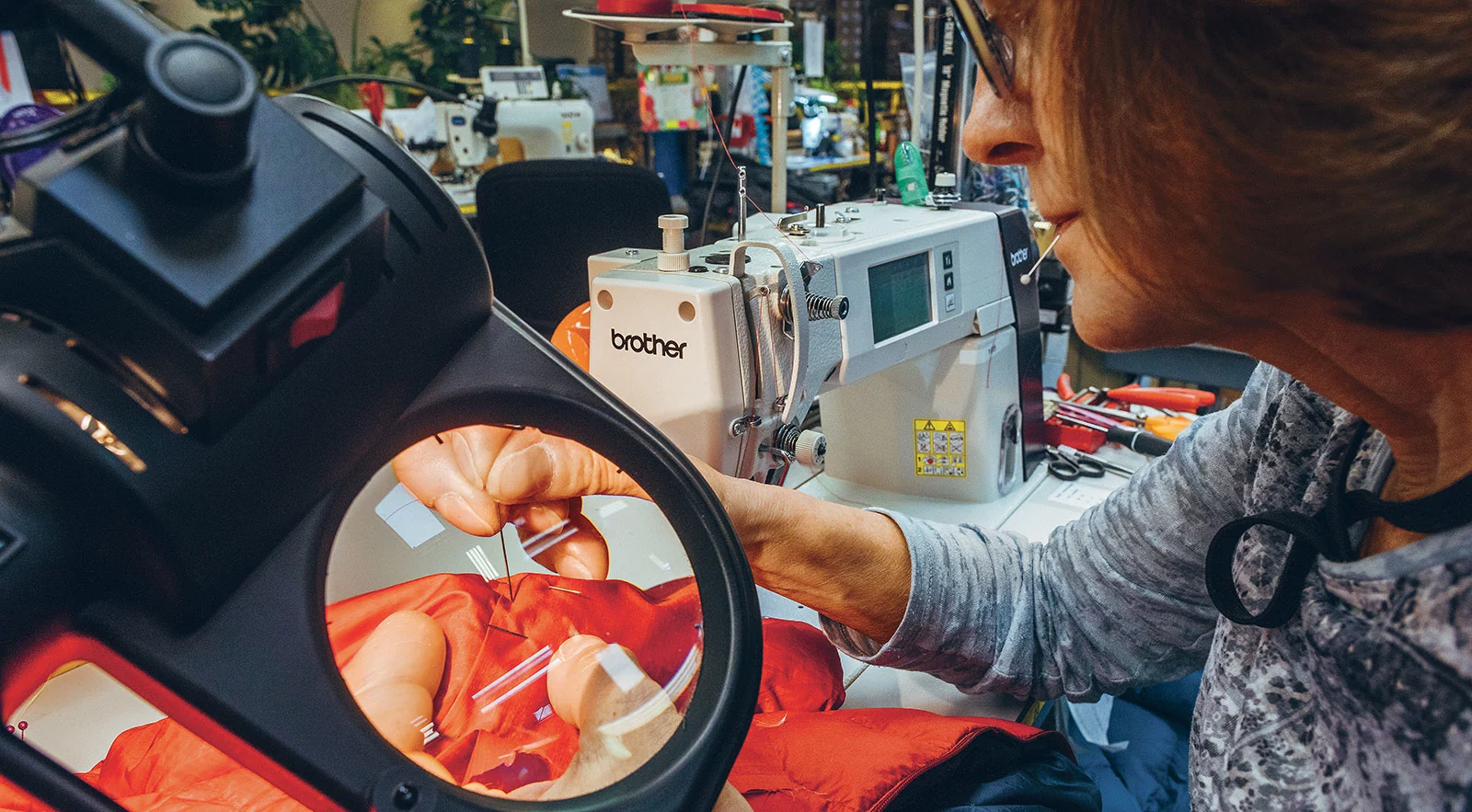
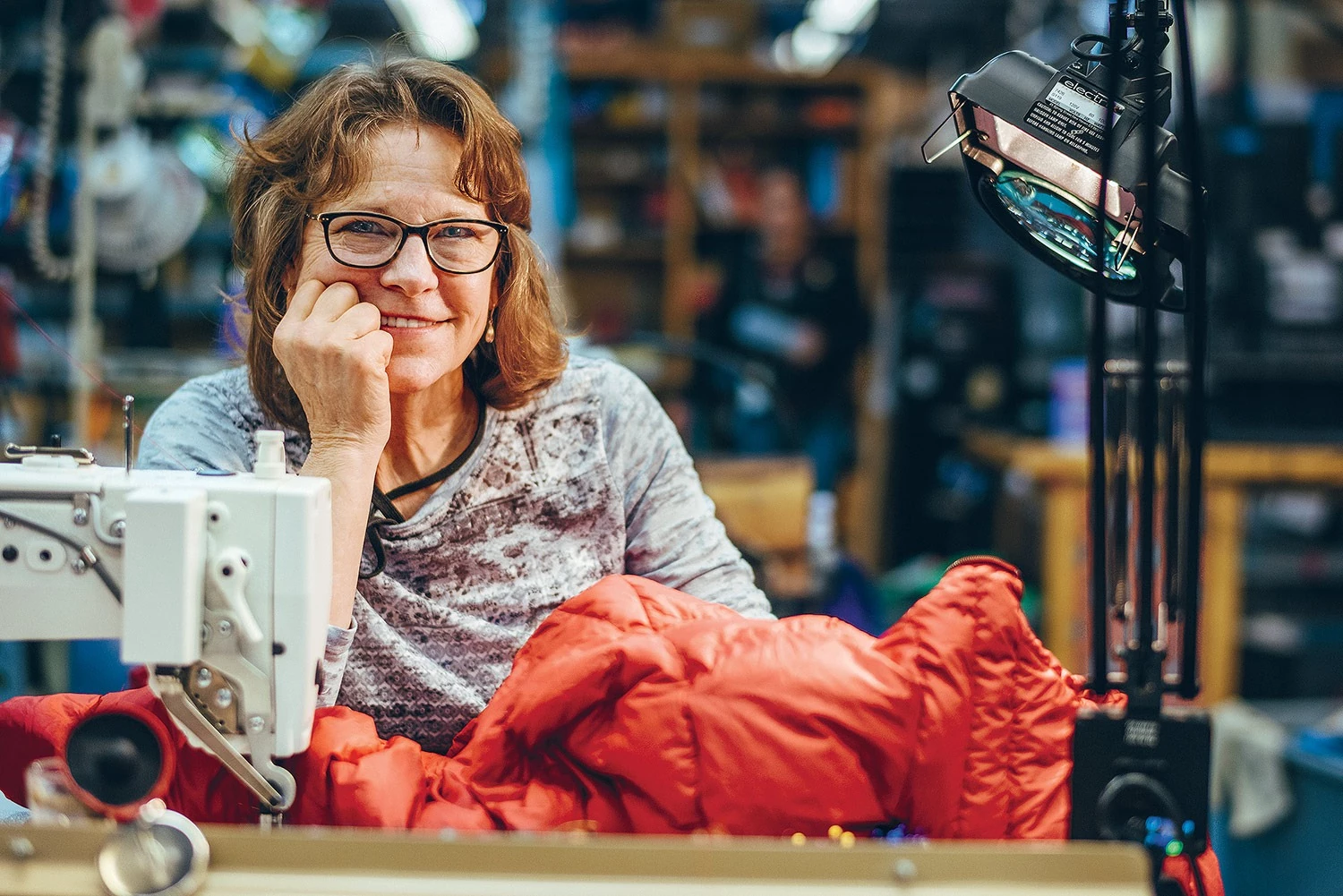
At Patagonia’s repair centre in Reno, Nevada, a worn jacket does not return as a generic unit. A failed zip, torn baffle or delaminating seam arrives with a particular history and requires a particular decision. Technicians train for months, progress from simple repairs to specialised work and reuse matching trims and fabric where they can. Worn Wear, launched in 2012, extends that practice through trade-ins, used sales and repair guidance. The programme makes durability operational: a garment’s long life is supported by people, parts, logistics and a place to send it when ordinary use finally leaves a mark.
Repair is not an escape from production. A company can mend thousands of jackets while continuing to introduce and sell new ones, and the environmental cost of the original garment remains. Yet repair changes the commercial relationship in a way that a recycled hangtag cannot. It asks the manufacturer to remain responsible after the transaction and gives the customer a reason not to replace an object merely because it no longer looks untouched. The patched sleeve becomes evidence of service rather than a failure of presentation, and the most persuasive product photograph may be the one taken after ten winters.
OWNERSHIP AFTER THE FOUNDER
In 2022, Yvon Chouinard and his family transferred the company into two entities. The Patagonia Purpose Trust holds the voting stock and protects the company’s stated mission; the Holdfast Collective, a nonprofit organisation, holds the nonvoting stock and receives the money that remains after the business has been reinvested in. The arrangement was designed to keep Patagonia private, resist a conventional sale and direct future value towards environmental work without turning the company into a public corporation obliged to maximise quarterly returns.
The transfer was also a sophisticated estate and tax structure, and critics were right to examine it as such. A durable institution should survive that examination. The relevant merit is not that an ownership document transforms commerce into philanthropy, but that it establishes enforceable control beyond the preferences of one charismatic founder. Patagonia must still make good products, pay people fairly and earn profits from consumption. The structure simply narrows what those profits can ultimately be for. It is a constraint, not absolution, which is precisely why it is more interesting than a pledge.
A REPORT SHOULD CONTAIN BAD NEWS
Corporate responsibility reports are often designed as rooms without shadows. The photographs are warm, the verbs continuous and every difficulty appears one initiative away from resolution. A useful report should do something less flattering. It should reveal which materials remain dependent on fossil fuel, which suppliers fall short, how many workers receive a living wage and what happens when an audit finds a problem. Patagonia’s modern-slavery statements, factory disclosures and footprint material are valuable to the extent that they allow those questions to become more precise.
Disclosure does not guarantee improvement, and the company still controls the categories and timing of what it publishes. Independent accreditation, reporting by workers and outside scrutiny remain necessary. But an incomplete public record is preferable to a perfect private claim because it gives criticism somewhere to land. A customer should be able to move from the jacket to the factory, from the factory to the standard and from the standard to the shortfall. The ethical business is not the one that has stopped producing problems; it is the one that makes evasion progressively more difficult.
BETTER IS A DIRECTION
Patagonia’s most defensible practices share a quality: they are difficult to compress into a label. Repair requires skilled technicians and an inventory of old components. Fair Trade requires worker committees and premiums. Supplier oversight requires repeated visits, documentation and correction. Mission ownership requires lawyers, governance and a willingness to surrender the ordinary rewards of a sale. None of this is as tidy as declaring a fabric sustainable or printing the planet on a shop window, but it creates systems that can continue after attention moves elsewhere.
The Patagonia test should therefore be applied beyond Patagonia. Does a company disclose where the work happens? Can its product be repaired, and has it built the capacity to do so? Do workers have a material role in the benefits attached to their labour? What prevents the next owner from discarding every promise? The answers will rarely be complete. That is not a reason to abandon the questions. It is a reason to prefer companies that leave enough evidence for the questions to become sharper with time.